Crown and controls
The crown, winding action, setting mechanism, and available pushers are checked for stiffness, looseness, visible wear, or difficulty adjusting the time and date.
Watch repair, servicing and maintenance
ifixa helps watch owners investigate timekeeping problems, restore dependable performance, and care for the details that make each timepiece unique. From battery replacement and bracelet adjustments to movement diagnostics and mechanical servicing, we begin by understanding the watch, its condition, and the repair it actually needs.
I need help with
Investigate timekeeping faults, replace worn components where appropriate, fit fresh batteries, adjust bracelets, and arrange maintenance suited to your watch's mechanism and condition.
Explore Repair OptionsMy watch has
Describe the symptoms, visible damage, model details, and any previous servicing before arranging an inspection. These details help us determine what should be examined first.
Understand the Repair ProcessWorkshop and service enquiries
Contact our team with your watch brand, model if known, current condition, and the issue you have noticed. Whether the watch has stopped, loses time, needs a new battery, or requires attention after an impact, we can discuss the appropriate inspection and possible repair options.
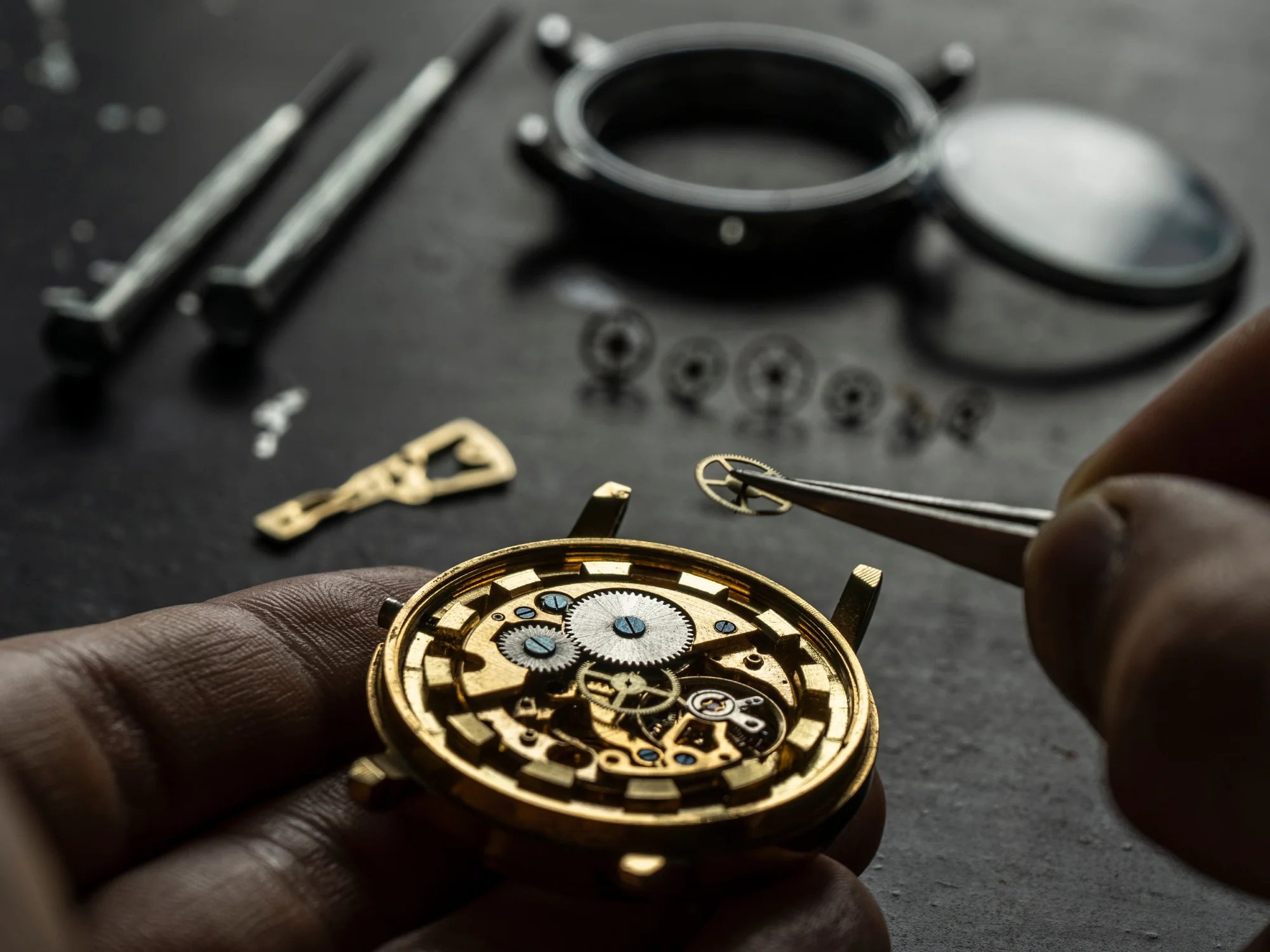
A careful assessment helps identify movement issues, worn components, battery problems, damaged external parts, and the service steps appropriate for each watch.
A successful watch repair starts with the right information: how the timepiece behaves, when the problem appeared, whether it has been serviced before, and which details matter most to its owner. A careful initial assessment helps establish the next steps without unnecessary guesswork.
Precision repair essentials
The crown, winding action, setting mechanism, and available pushers are checked for stiffness, looseness, visible wear, or difficulty adjusting the time and date.
For quartz watches, we investigate battery condition and power-related symptoms. If a fresh battery does not resolve the issue, further inspection may be needed to identify the cause.
Visible scratches, cracked crystals, damaged case edges, loose components, and signs of moisture exposure are reviewed to determine which external parts may need attention.
Stopping, inconsistent timekeeping, unusual sounds, or irregular movement behavior can indicate a need for diagnostic testing, internal inspection, adjustment, or mechanical servicing.
We review worn straps, loose links, damaged clasps, spring bars, and fitting concerns to identify suitable adjustments or replacement components for a secure and comfortable fit.
A watch that stops running does not always need the same repair as one that loses time or has a damaged crown. Identifying the underlying cause helps avoid unnecessary work and supports a more appropriate service recommendation.
Symptoms, visible condition, movement type, and known service history help guide the inspection and establish which repair steps may be necessary.
Quartz, automatic, and manually wound watches have different construction and servicing needs. The proposed approach should reflect the specific mechanism and condition of the watch.
Contact us by phone or email to describe the problem, ask about possible solutions, and clarify the inspection process, expected costs, and repair options before proceeding.
From the first enquiry to the recommended service, each stage helps establish what needs attention, which parts may be involved, and what should be confirmed before work begins.
Precision tools and techniques
Watch servicing can involve movement inspection, precision screwdrivers, specialized opening tools, timing analysis, battery testing, and careful handling of small components. Methods are selected according to the watch's construction and the work required, with particular attention to delicate parts and manufacturer-specific designs.
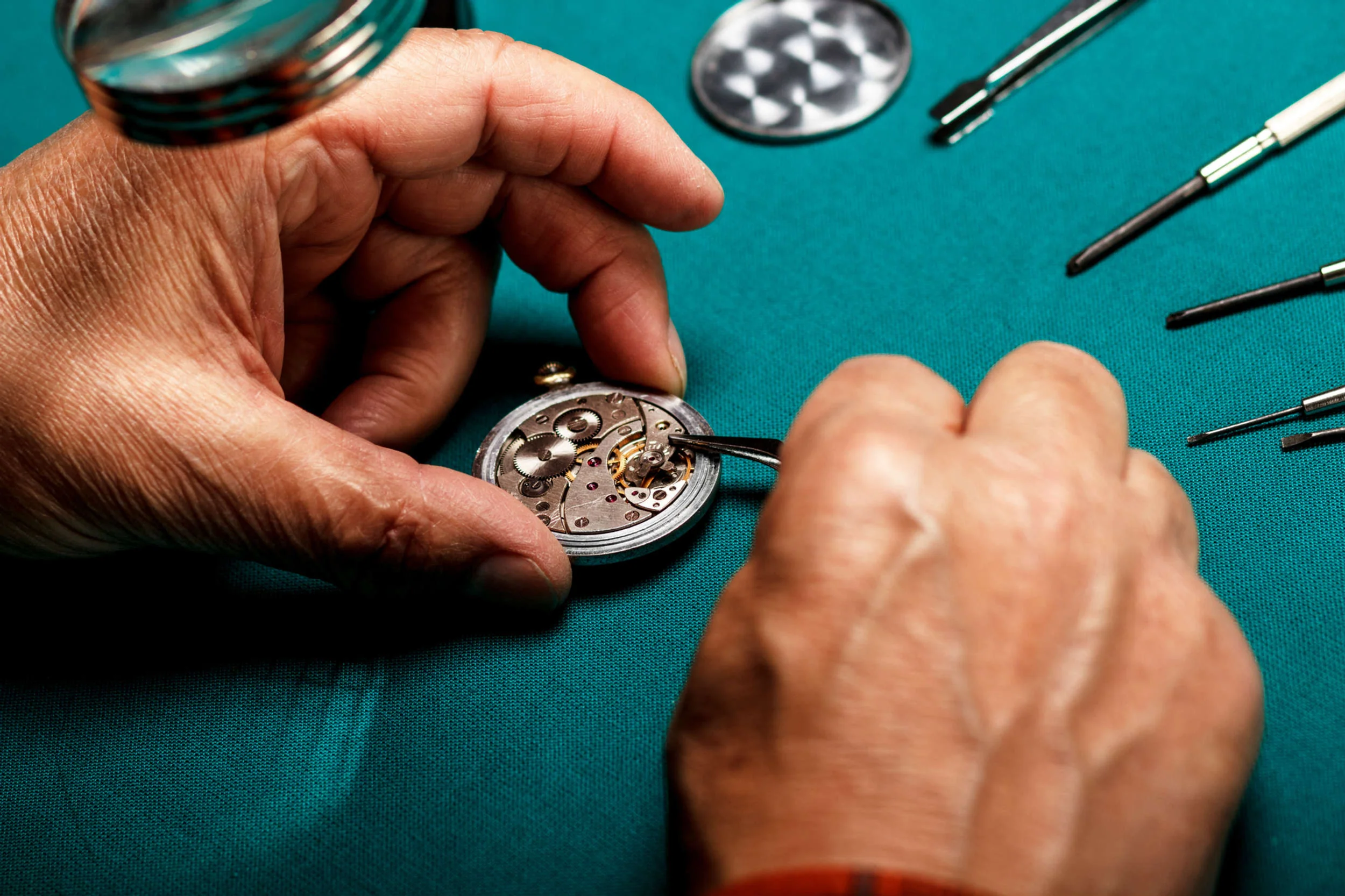
A timepiece combines delicate internal mechanisms with carefully fitted external components. Reviewing each area separately helps identify visible wear, functional problems, and potential repair needs before deciding on the appropriate service.
| Watch component | Inspection focus | Details to confirm |
|---|---|---|
| Movement and timekeeping | Accuracy, stopping, irregular motion, winding behavior | Movement type, symptoms, service history |
| Battery and electrical functions | Battery condition, power interruptions, display operation | Battery type, previous replacement, persistent faults |
| Case and crystal | Scratches, cracks, loose parts, visible moisture signs | Impact history, damaged seals, cosmetic concerns |
| Crown and setting controls | Winding resistance, time and date adjustment, button function | Stiff controls, looseness, missing or damaged components |
| Strap, bracelet and clasp | Fit adjustment, worn links, fastening security, strap condition | Wrist fit, replacement preferences, damaged pins or clasps |
“The watch stopped unexpectedly. I replaced the battery recently, but it still loses time and sometimes the hands do not move as expected.”
“My automatic watch no longer keeps accurate time, and the winding feels different than before. I would like the movement checked before the problem gets worse.”
“One bracelet link feels loose, and the clasp does not close securely. I need the fit and fastening checked so I can wear the watch with confidence.”
Share the watch brand and model if known, whether it uses a quartz or mechanical movement, the symptoms you have noticed, and any relevant repair or service history. Photos of visible damage can also help explain the issue.
Yes. If a new battery does not restore normal operation, the watch may need additional diagnostic checks. The cause can involve electrical contacts, the movement, or another component, so further inspection is recommended before determining the repair.
Yes. Contact us by phone or email with the watch details and a description of the fault. We can discuss the likely next steps and explain what needs to be confirmed during an inspection. Repair scope, pricing, and timing depend on the watch's condition and the work required.